
How to Use AI at Work
How to Use AI at Work How to Use AI at Work How to Use AI at Work How to Use AI at Work
A Complete Guide to Optimize Your Professional Routine
Artificial intelligence has gone from being a futuristic promise to a real tool in everyday work. Research indicates that companies implementing AI increase their productivity by up to 40% . What’s most interesting is that most tools you’ll need have free or very accessible versions, accessed directly through your browser.
The question is no longer “if” we’ll use artificial intelligence at work, but “how” we’ll use it to gain more time, quality, and autonomy. AI can handle repetitive tasks, organize information, review texts, and even act as a strategic partner. The secret lies in learning to use it without losing control.
“At first, I only used ChatGPT to answer quick questions and write emails. It was when I started using it to review reports and organize my tasks that I realized how much time I was wasting doing everything manually — today AI has become an extension of my work routine.”
How to Use AI at Work How to Use AI at Work How to Use AI at Work How to Use AI at Work

Why Use AI at Work Now?
According to the AI & Economy ATLAS study, published by Google, AI is already present in 68% of analyzed occupations, but in only about 21% of tasks . This means there’s still enormous growth potential for those who know how to integrate the technology into their routine.
The gain is not limited to productivity. “When the professional stops spending time on repetitive and operational tasks, they can focus their efforts on more strategic activities,” explains specialist Felipe Matos . AI also opens space for what essentially depends on people: exchanging ideas, making decisions, negotiating, creating, and solving complex problems.
How to Use AI at Work How to Use AI at Work How to Use AI at Work How to Use AI at Work



The Four Levels of Using AI at Work
According to Amazon executive Leandro Balbinot, there are four levels of AI usage that every professional should know about .
Level 1 — Assistant: The First Step
About 90% of people are already at this level. It’s the most basic use, with tools like ChatGPT, Gemini, or Claude to answer questions, generate texts, and organize ideas. At this stage, AI is an on-demand tool you consult when needed .
Level 2 — Explorer: Beyond the Ready Answer
The second level is when you use AI to deepen research, work with data, and generate new ideas . Instead of just asking for ready-made answers, you use AI as an investigation partner, cross-referencing information and exploring different angles of a problem.
Level 3 — Partnership: Creating Digital Partners
The third level, considered the most important by many experts, is when you start creating digital “partners” — as if they were a CFO, a CEO, or a marketing manager . You interact with AI as if you had a team working with you, delegating tasks and receiving deliverables ready for review.
Level 4 — Multiplication: Autonomous Agents
The highest level is when you create autonomous agents that execute tasks for you, allowing you to focus on more strategic activities . These agents can do research, send emails, create documents, and even interact with other systems independently . Microsoft Copilot Cowork, for example, is an “AI colleague” capable of sending emails, creating documents, and scheduling meetings autonomously.
How to Use AI at Work How to Use AI at Work How to Use AI at Work How to Use AI at Work
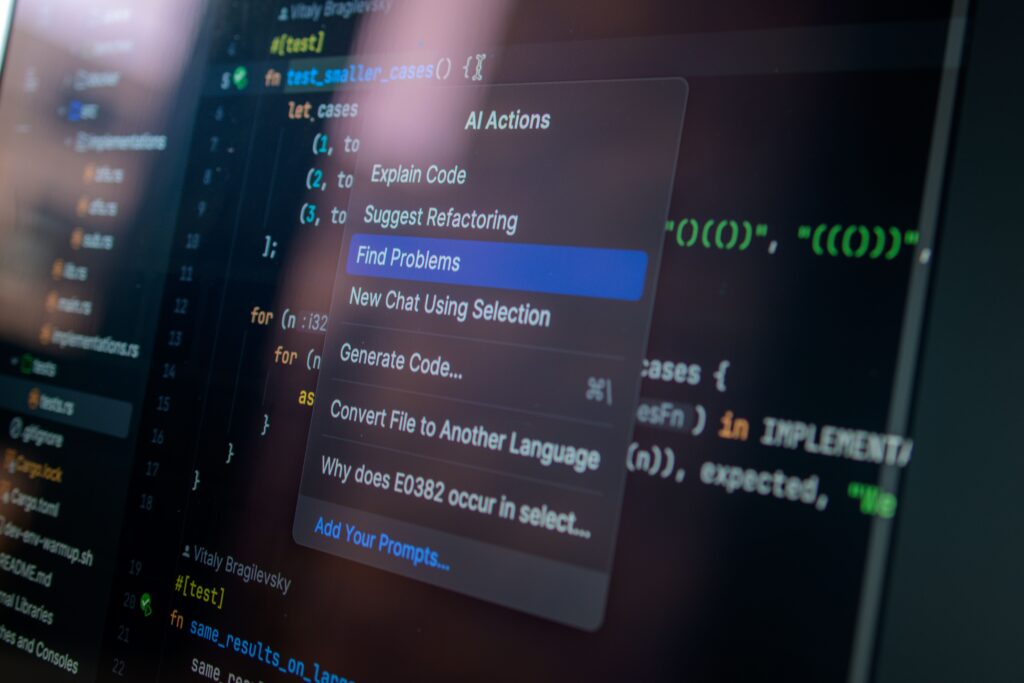
Essential Tools for Each Professional Task
ChatGPT: The Versatile Assistant for Creation and Analysis
ChatGPT is one of the most versatile tools, used for writing texts, organizing ideas, and supporting various tasks . The free version covers basic uses, while paid plans offer more complete responses and greater usage volume.
Best for: writing texts from scratch, reviewing documents, summarizing PDFs, analyzing uploaded data, creating scripts, and generating ideas .
Gemini: Integration with the Google Ecosystem
Gemini stands out for its native integration with Google services like Gmail, Drive, and Google Docs . It’s ideal for those who already use the Google ecosystem in their daily work.
Best for: summarizing emails, finding files in Drive, planning schedules, organizing tasks, and researching information . Integration with Gmail and Docs allows Gemini to access your content directly without manual uploads.
Microsoft Copilot: Productivity in the Corporate Environment
Integrated with the Office suite, Copilot assists with document creation, analysis, and email organization . It’s the natural choice for those working with Word, Excel, PowerPoint, and Teams .
Best for: turning documents into presentations, analyzing spreadsheets in Excel, and summarizing meetings in Teams .
Claude: The Expert in Long Texts
Claude, from Anthropic, stands out for the quality of long-form text and maintaining context in extended conversations . It is frequently used for summarizing complex documents, analyzing reports, and organizing structured information .
Best for: in-depth editorial review, long document analysis, and comparing different versions of texts .
NotebookLM: Focused Analysis on Your Sources
NotebookLM, from Google, is especially recommended when analysis needs to remain linked to a specific set of sources . Instead of responding generically, it works exclusively with the documents provided by the user .
Best for: studying reports, analyzing contracts, researching technical content, and locating specific information in long documents . It’s the ideal tool for those who want answers based only on reliable sources.
Perplexity: Research with Reliable Sources
Perplexity combines search engine and artificial intelligence, providing answers accompanied by sources . It is useful for quick research, information gathering, and data verification .
Best for: initial research, trend mapping, and getting an overview of a subject with verifiable sources .
How to Use AI at Work How to Use AI at Work How to Use AI at Work How to Use AI at Work

Practical Applications of AI in Everyday Professional Life
Writing and Text Review
AI can act at different levels of revision. Beyond correcting spelling and grammar, it can identify clarity issues, wordiness, repetitions, and language inadequacies . It can also adapt content to different audiences and channels.
How to use: provide a well-structured briefing (target audience, tone of voice, and objective) and AI generates multiple text options in seconds . Golden tip: never send the text exactly as AI produced it. Use it as a draft, add your voice and personality.
Data and Spreadsheet Analysis
Have a dataset and want to identify patterns? Describe the information to AI and ask for interpretations . It won’t replace a data scientist, but it can eliminate unnecessary meetings.
Practical example: a sales analyst needed to understand why certain clients had canceled in the previous month. Instead of spending two hours on spreadsheets, he described the pattern to ChatGPT and obtained relevant hypotheses to investigate in just three minutes .
Creating Presentations
Slide creation no longer needs to be a low-value task. AI transforms structured documents into coherent visual supports in minutes, shifting focus from formatting to message strategy .
How to use: ask AI to summarize your document’s content into main topics, organize them into a presentation structure, and suggest visual elements for each slide.
Email Management
If your inbox is always full, AI can help. It identifies messages that need attention, summarizes content, and drafts responses .
How to use: set up AI to prioritize emails by importance, summarize long conversations, and suggest personalized responses. You review before sending.
Research and Information Gathering
AI can significantly reduce time spent on research, organization, and information analysis . Specialized tools consult different sources, examine uploaded documents, compare data, and produce structured reports with references.
How to use: define a research objective and ask AI to gather information from different sources, organize them into categories, and present a report with links and citations.
Automating Repetitive Tasks
AI can take over complete workflows and schedule recurring tasks . It can check messages, monitor sites and dashboards, track client feedback, and prioritize ideas.
How to use: identify tasks you do repeatedly that consume time. Teach AI to perform them autonomously, with clear rules and action limits.
How to Use AI at Work How to Use AI at Work How to Use AI at Work How to Use AI at Work

How to Start Today
You don’t need a five-year plan to implement AI in your work. Start with a simple test:
- Day 1: create a free account on a tool like ChatGPT, Gemini, or Claude .
- Days 2 and 3: choose a task you do weekly (an email, a post, an analysis) and ask AI to help . Observe how much time you save.
- Week 1: try a specialized tool in your field . Most offer free versions.
- Weeks 2 to 4: gradually integrate AI into your routine . Start with one task and, once you see it works, expand to others.
“I started exactly like that: I picked a simple task I did every week and tested it with AI for a few days. The time savings were so visible that within a few weeks, I was already integrating AI into several other activities in my professional daily life.”

Common Mistakes When Using AI at Work
1. Turning to AI Before Structuring an Idea
The most efficient use happens when the professional already has clarity on what needs to be done and uses the tool to refine, organize, or review . Using AI as a starting point generates generic responses and loss of autonomy.
2. Accepting the First Answer Without Questioning
AI can suggest paths, but it doesn’t replace analysis . Information should be reviewed, compared, and adapted to the context. Professionals who just reproduce ready-made answers tend to lose autonomy and decision-making capacity .
3. Automating Everything
Not every task needs to be delegated. Activities involving creativity, strategy, or decision-making require active participation . Defining when AI will be used helps avoid dependency.
4. Thinking AI Replaces Critical Thinking
AI speeds up tasks, but the decision is still yours. It suggests paths and writes drafts, but it doesn’t know the full context of your work or take responsibility.

Conclusion
Knowing how to use AI for work is no longer a differentiator — it’s a necessity for those who want to stay relevant in the market. The secret lies in balancing technology use with developing your own skills: creativity, critical thinking, and the ability to make strategic decisions.
As specialist Leandro Balbinot said, “the biggest challenge today is not access, it’s mindset” . AI should adapt to the professional, not the other way around. Creating your own method, with processes, criteria, and references, ensures consistency in your work. The tool serves as support, but the final delivery is still the result of your individual capability.
Start today. Choose a repetitive task, test a tool, and see how much you can gain in time and quality.

Frequently Asked Questions
How to start using AI at work?
Start by creating a free account on a tool like ChatGPT, Gemini, or Claude. Choose a simple, repetitive task and ask AI to help, comparing the result with what you would have done yourself .
Which AI is best for work?
It depends on what you need. ChatGPT is versatile for creation and analysis . Gemini stands out for its integration with the Google ecosystem . Copilot is ideal for Microsoft 365 users . NotebookLM is perfect for analyzing your own documents .
Will AI replace my job?
There is a risk, especially for those who don’t evolve. If a person continues doing repetitive tasks the same way, they might be replaced . On the other hand, professionals who learn to use AI as an ally can expand their scope and become more creative and strategic .
How to avoid AI dependency?
Use AI as support, not as a starting point . Define when AI will be used (text review, idea generation, information organization) and preserve activities that require creativity, strategy, and decision-making .
What are autonomous AI agents?
They are assistants that execute tasks independently . You define the goal and the agent decides the steps to achieve it, being able to research, send emails, create documents, and interact with other systems .
Is it safe to use AI with confidential company data?
Caution is needed. Companies deal with sensitive financial, legal, and strategic data, and AI adoption in corporate environments depends on security and privacy policies .