How to create a productive routine
How to create a productive routine How to create a productive routine How to create a productive routine
A practical guide to organizing your day
Have you ever reached the end of the day exhausted but with the feeling that you haven’t accomplished anything truly important? Have you found yourself responding to emails, attending meetings, and putting out small fires, only to realize that the tasks that really matter were left for later?
This feeling is more common than you think. Many people confuse being busy with being productive. Productivity is not about filling every minute of your day with activities, but rather about doing the right things — those that generate real impact and bring you closer to your goals . The secret lies not in working more hours, but in making better use of the time you have .
The good news is that creating a productive routine doesn’t require a radical overnight change. Small habit changes, applied consistently, can completely transform how you handle your time and tasks .
In this guide, you’ll learn a step-by-step approach to building a productive routine — from planning to execution, with proven techniques and tips for staying focused.
“I used to spend the whole day answering messages, attending meetings, and putting out fires — and by late afternoon, I would realize that the tasks that truly mattered were still untouched. When I started setting aside time blocks for what was strategic, my productivity completely changed.”
How to create a productive routine How to create a productive routine How to create a productive routine
What is a productive routine?
A productive routine is a set of practices and habits that guide your daily activities, providing focus, clarity, and efficiency . It works as a practical roadmap that directs your actions and helps prioritize the most important tasks, avoiding the feeling of overload and wasted time .
It’s important to understand that productivity is not synonymous with production. While production measures the volume of what is done, productivity measures the relationship between the result obtained and the resources (time, energy, effort) employed to achieve it . Being productive is doing more with less — less time, less waste, less stress.
The first step to building your routine is to abandon the myth that productivity means being busy all the time . A truly productive routine reserves space for rest, leisure, and self-care — because a tired brain doesn’t make good decisions .
How to create a productive routine How to create a productive routine How to create a productive routine

Before you start: understand how you use your time
Before applying any technique, it’s essential to understand how you are currently spending your time. Many people skip this step and try to implement productivity methods without knowing where the real bottlenecks are.
Identify your time thieves
Distractions are the greatest enemies of productivity. Social media, for example, consumes an average of 2 hours and 30 minutes per day — time that could be dedicated to important tasks . Each notification interrupts your focus, and it takes about 23 minutes to fully regain concentration after each interruption .
Other common time thieves:
- Constantly checking emails
- Unnecessary meetings
- Lack of clear priorities
- Multitasking (which reduces productivity by up to 40%)
Set aside a day or two to write down everything you do and how much time each activity takes. You’ll be surprised to discover how many hours are consumed by tasks that don’t bring real results.
Identify your peak energy time
Most people have two to three hours of peak cognitive performance per day. For many, this happens in the mid-morning . Reserve your most important and challenging tasks for these peak times. Physical energy also depends on adequate sleep, good nutrition, and regular exercise .
How to create a productive routine How to create a productive routine How to create a productive routine
Step-by-step guide to creating your productive routine
1. Plan your day the night before
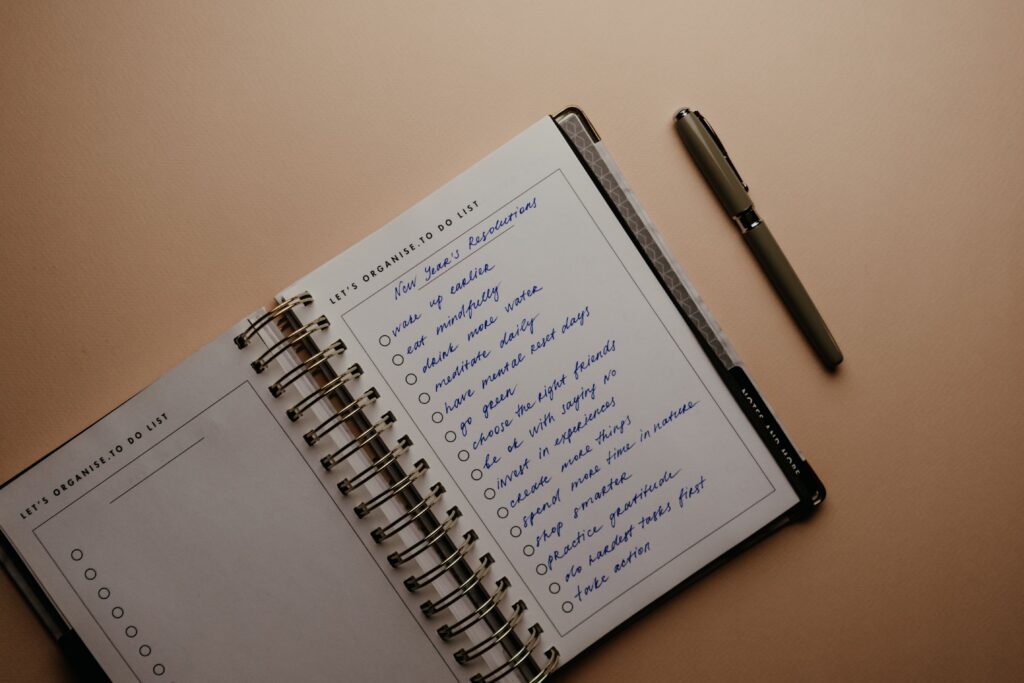
Planning is the foundation of a productive routine. Instead of starting the day without direction, set aside a few minutes the night before to organize the next day . This practice reduces anxiety, provides clarity on what needs to be done, and allows you to start the day with clear focus .
How to do it: write down your tasks, set priorities, and establish a basic schedule. Use a planner, a notebook, or an app like Google Calendar or Trello .
2. Set real priorities
Not all tasks carry the same weight. Setting real priorities means identifying what is urgent, what is important, and what can wait . This prevents overload and keeps focus on what truly makes a difference.
Useful tool: The Eisenhower Matrix helps filter urgent and important tasks, dividing them into four quadrants :
- Urgent and important: do now
- Important but not urgent: schedule for later
- Urgent but not important: delegate if possible
- Neither urgent nor important: eliminate
3. Apply the Ivy Lee Method
Over 100 years of history prove the effectiveness of one of the simplest productivity techniques in the world. Created in 1918 by journalist Ivy Lee, the method has just 5 steps :
- At the end of each day, write down the 6 most important things you need to do tomorrow (no more than 6 tasks)
- Prioritize your tasks in order of importance
- Start the day with the first task and work on it until completed, only then move to the second
- At the end of the day, if any item is unfinished, add it to the next day’s priority list and start with it
- Repeat this process every day
The method is simple but develops concentration and decision-making skills, while avoiding task overload .
4. Use Time Blocking
Instead of relying on a loose to-do list, Time Blocking proposes dividing your day into fixed blocks dedicated exclusively to specific tasks . The difference is crucial: while a list says what to do, Time Blocking defines when to do it .
How it works:
- Each period of the day has a pre-defined purpose
- You make a real commitment to your available time
- Transforms tasks into calendar commitments
Benefits include deep focus, elimination of multitasking, better time awareness, and reduced stress . The brain relaxes because it knows exactly what will be done at each hour, eliminating anxiety .
Practical tip: combine Time Blocking with the Pomodoro Technique (25-minute blocks with short breaks) for even more focus .

5. Start the day with the most difficult task
The “Eat the Frog” technique suggests you start the day with the most challenging tasks or those you tend to procrastinate on . By completing these activities early on, you’ll have more energy and motivation for the rest of the day .
Why it works: your mental energy is at its peak in the morning. If you leave the difficult task for later, anxiety will grow throughout the day and the task will seem increasingly heavier .
“I tested the ‘eat the frog’ technique for a week and was amazed. Tackling the hardest task first thing in the morning, before opening emails and social media, gave me a feeling of lightness that lasted all day — and the rest of the activities seemed much simpler.”
6. Eliminate distractions
Identifying and eliminating distractions during work hours is essential for maintaining productivity . Turn off social media notifications, organize your workspace, and if possible, use apps that block distracting sites .
Useful apps: Forest, Freedom, Cold Turkey .
7. Include strategic breaks and self-care
Short breaks between tasks can transform your routine, improving delivery quality and preventing emotional burnout . Working without breaks can lead to mental exhaustion, reducing your ability to concentrate .
Self-care tips: stretch, drink water, take a short walk, or simply breathe deeply . Self-care is not a luxury — it’s a strategy for maintaining productivity without exhaustion .
8. Take care of nutrition, hydration, and sleep
These three pillars are fundamental for keeping body and mind functioning well . Healthy eating provides energy, hydration improves body function, and quality sleep is essential for physical and mental recovery .
Sleep: aim for 7 to 8 hours of sleep per night and maintain consistent times . Sleep quality directly influences the next day’s energy and performance .
9. End the day with a strategic check-in
At the end of the day, take 10 minutes to review the day . Ask yourself three simple questions:
- What tasks did I complete today?
- What’s pending and needs attention?
- What can I reschedule or reorganize for tomorrow?
This practice serves as a transition brake between work and personal life. Beyond organizing priorities for the next day, it helps you truly disconnect, with a lighter mind .
10. Review your routine weekly
The perfect routine doesn’t exist. What exists is the search for balance and well-being, with constant adjustments as your needs and priorities change . Set aside time on the weekend to evaluate what worked and what can be improved .
How to create a productive routine How to create a productive routine How to create a productive routine

Common mistakes when trying to create a productive routine
1. Filling the schedule like a perfect Tetris game
With no space between blocks. Real life doesn’t work like that. Unexpected events arise — and everything falls apart.
2. Leaving everything open
Trusting that “things will work out during the day.” The truth is that no one does this every day and maintains consistency.
3. Ignoring self-care
Working without breaks, without eating well, without sleeping enough. This only leads to burnout .
4. Trying to do everything at once
Multitasking reduces productivity by up to 40% . Focus on one task at a time .
How to create a productive routine How to create a productive routine How to create a productive routine

Frequently asked questions about productive routines
What’s the first thing I should do to create a productive routine?
Start with a diagnosis. Understand how you are currently spending your time. Then, start planning your day the night before and define your 3 to 6 priorities for the next day .
Does the Pomodoro Technique work?
Yes. It consists of working for 25 minutes and taking a 5-minute break. After four cycles, a longer break of 15 to 30 minutes. It helps maintain focus, avoid mental fatigue, and improve performance .
What is Time Blocking?
It’s a methodology that consists of dividing your day into fixed blocks dedicated exclusively to specific tasks. Unlike common to-do lists, this technique helps eliminate multitasking and ensures your priorities receive the necessary focus .
How to deal with interruptions during the day?
Create specific “containers” for distractions. For example, reserve 30-minute blocks to respond to emails and messages, instead of doing this throughout the entire day. Use blocking apps during focus periods .
Do I need tools to be productive?
They’re not mandatory, but they help a lot. Google Calendar, Trello, Todoist, and Notion are great for organization. Freedom and Forest help block distractions .
How to maintain consistency in the routine?
The secret lies in rituals. Set fixed times for your anchor tasks, review your day every night, and accept that unexpected events will happen — but protect your sacred focus moments .