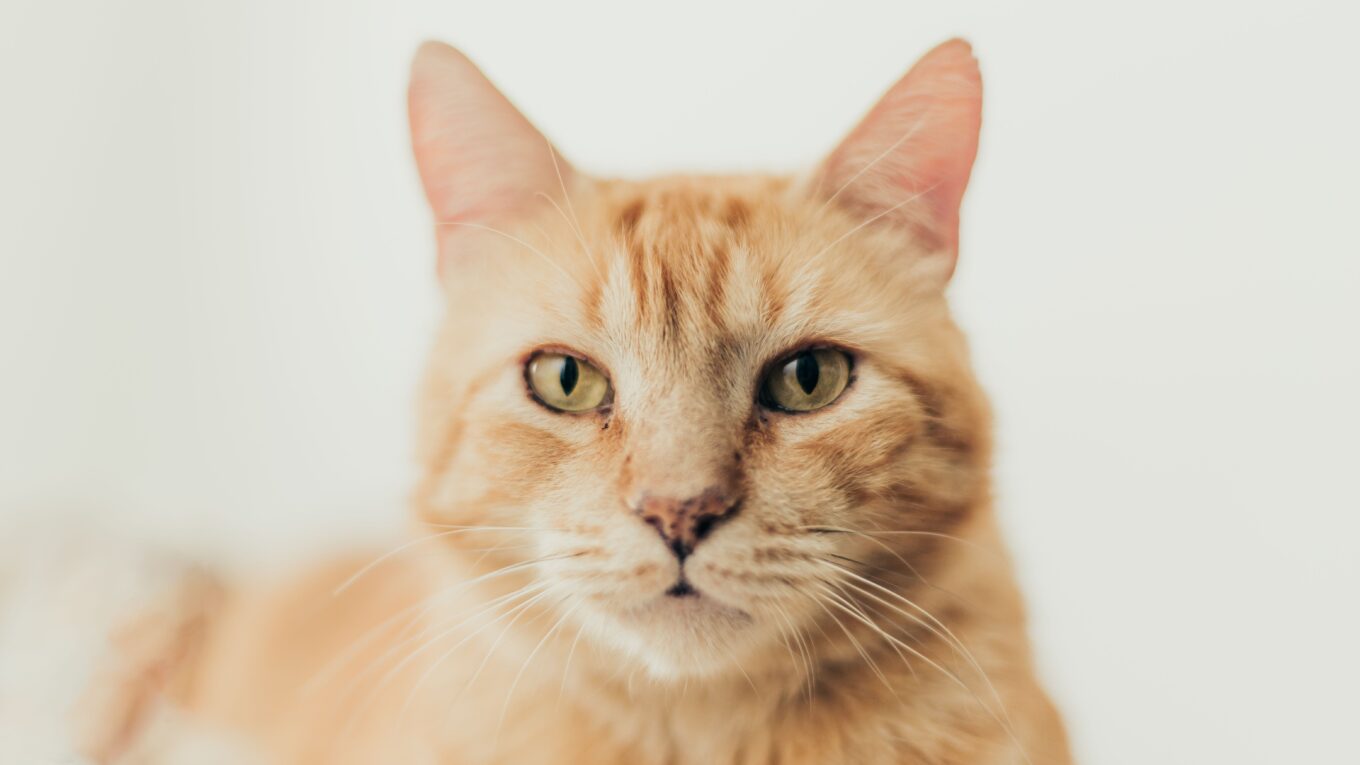
Why Do Cats Purr? What Science Reveals?
Why Do Cats Purr? Why Do Cats Purr? Why Do Cats Purr? Why Do Cats Purr?
What Science Reveals About This Mysterious Sound
Purring is perhaps the most recognizable sound a cat makes. Most people associate purring with contentment and pleasure, and that association isn’t wrong. But it’s incomplete. In recent decades, science has discovered that purring is a far more complex phenomenon, serving multiple functions — from communication to self-healing. And in 2023, a surprising discovery revealed that the mechanism behind this sound may be quite different from what was previously thought.
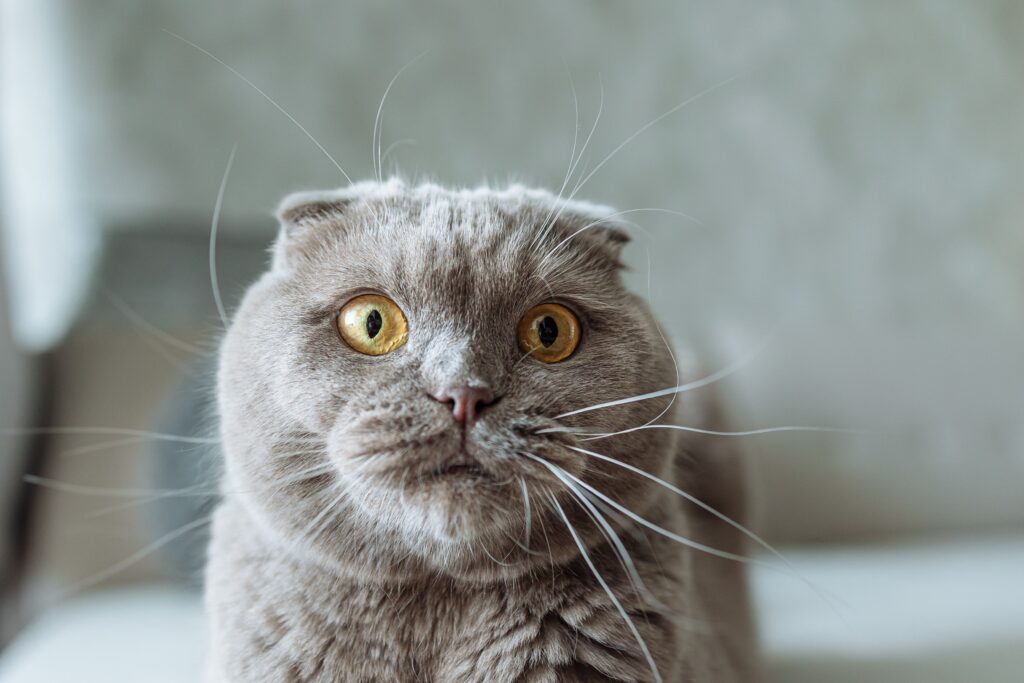
How Do Cats Produce the Purr? (It’s Not What You Think)
The Mechanism of the Larynx and Diaphragm
For a long time, it was believed that purring was produced by active muscle contractions. The most accepted theory was that the muscles of the larynx moved about 20 to 30 times per second, causing the air to vibrate with each breath . These contractions would be commanded by a neural oscillator in the cat’s brain, generating the continuous sound we hear.
The larynx, the organ responsible for voice production, is located in the cat’s throat. It contains the vocal cords and the vestibular folds. When the cat breathes, air passes through this structure, and the resulting vibrations produce the purr . The sound can be emitted during both inhalation and exhalation .
The 2023 Discovery: Purring Is More Physical Than Neural
In 2023, a study published in the journal Current Biology challenged this theory. Researchers investigated cat larynges that had been removed (excised) and discovered something surprising: even without any neural input or muscle contraction, the larynges produced sounds at the typical purring frequency .
Histological analysis revealed the presence of connective tissue masses up to 4 millimeters in diameter embedded in the cats’ vocal folds. This anatomical specialization appears to allow purring to be produced passively, through the same physical principle that generates other mammalian vocalizations .
The researchers concluded that although the active muscle contraction mechanism may still play some role, purring is fundamentally a physical and passive phenomenon, dependent on the unique properties of feline vocal folds.
Why Do Cats Purr? Why Do Cats Purr? Why Do Cats Purr? Why Do Cats Purr?
The Multiple Functions of Purring
1. Contentment and Relaxation
The most well-known function of purring is to express contentment. When a cat curls up on your lap, closes its eyes, and begins to purr, it is clearly indicating that it feels safe, happy, and relaxed . The rhythmic sound creates a soothing environment that reinforces the bond between the cat and its owner .
2. Communication Between Mother and Kitten
Purring begins very early in a cat’s life. Kittens are born blind and deaf, relying almost entirely on touch and smell . The mother uses soft vibrations to communicate with her kittens, signaling that it’s safe to come closer and nurse. The kittens, in turn, purr back, creating a mutual sense of comfort and security . This communication behavior continues in some adult cats, who purr while eating or when asking for food .
3. The “Solicitation Purr”: Asking for Food or Attention
Researchers have identified a specific type of purr that cats use to solicit something — usually food or attention. It’s called the “solicitation purr” .
This purr is a high-pitched mixture of purring and meowing, with a high-frequency component that humans perceive as more urgent and less pleasant than a normal purr. Interestingly, this frequency corresponds to that of human infant distress cries, which explains why humans respond so readily to this type of purr .
Studies demonstrate that the solicitation purr is most used by adult cats and directed toward humans to solicit food. If you’ve ever been “convinced” by your cat to serve dinner early, you were probably the victim of a solicitation purr .
Why Do Cats Purr? Why Do Cats Purr? Why Do Cats Purr? Why Do Cats Purr?

4. Self-Healing and Pain Relief
One of the most fascinating aspects of purring is its possible self-healing function. Cats purr when recovering from injuries, when in pain, or even during labor .
The explanation lies in the frequency of the sound. Purring occurs between 25 and 150 Hz . This frequency range coincides exactly with frequencies used in therapies for bone regeneration, pain relief, edema reduction, and tissue recovery .
A 2001 study led by Elizabeth von Muggenthaler analyzed the purrs of 44 felines, including domestic cats, cheetahs, pumas, and servals. All produced strong frequencies between 25 and 150 Hz. Domestic cats, servals, ocelots, and pumas produced fundamental frequencies at exactly 25 Hz and 50 Hz — the two frequencies that best promote bone healing .
This discovery suggests that purring may be an evolutionary mechanism that helps cats recover from injuries and maintain bone health, especially during periods of inactivity .
Why Do Cats Purr? Why Do Cats Purr? Why Do Cats Purr? Why Do Cats Purr?
5. Self-Regulation in Stressful Situations
Purring isn’t always a sign of happiness. Cats also purr when they are anxious, afraid, or in stressful situations . In these cases, the purr functions as a self-soothing mechanism, similar to the human habit of humming or rocking when anxious .
Cat photographer and feline behavior scholar Marjan Debevere has witnessed cats purring while dying. “The vet said something like ‘they purr until the end’ and people believe they are happy when purring. But that’s not always the case,” she reports .
Veterinarian Gary Weitzman, CEO of the San Diego Humane Society, confirms: “While purring generally represents satisfaction for cats, it can also express a nervous state, fear, and stress” .
Why Do Cats Purr? What Science Reveals? Why Do Cats Purr? What Science Reveals? Why Do Cats Purr? What Science Reveals?
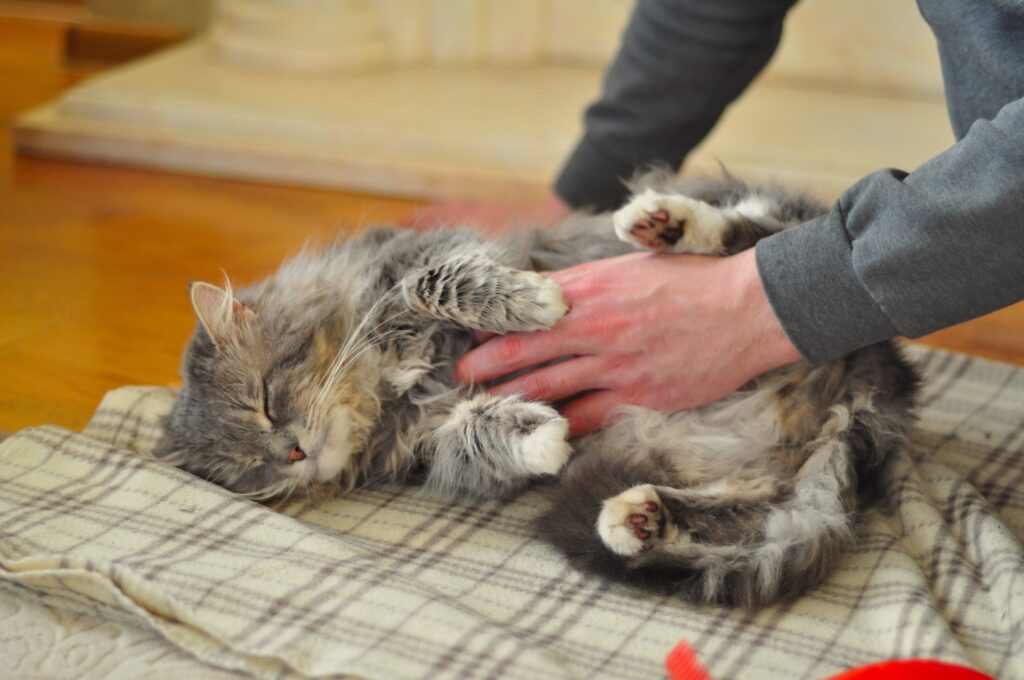
Does Purring Have Healing Power?
Frequencies That Promote Regeneration
The frequencies of purring don’t benefit only cats. Research indicates that vibration between 25 and 150 Hz may have therapeutic effects for humans as well .
Studies have shown that these frequencies are associated with:
- Tissue regeneration and wound healing
- Increased bone density and tendon and muscle repair
- Pain relief and edema reduction
- Reduced risk of heart disease
Benefits for Humans
Beyond physiological effects, purring has psychological benefits for owners. The continuous sound and vibration of the purr promote a sense of calm and relaxation .
According to Weitzman, “we respond to a cat’s purr as a calming stimulus” . Studies suggest that petting a cat while it purrs stimulates the production of oxytocin, helping to reduce levels of cortisol, the stress hormone . Decreased cortisol is related to reduced blood pressure and pain .
Additionally, hearing a feline purr can reduce the heart rate of owners, contributing to cardiovascular health .
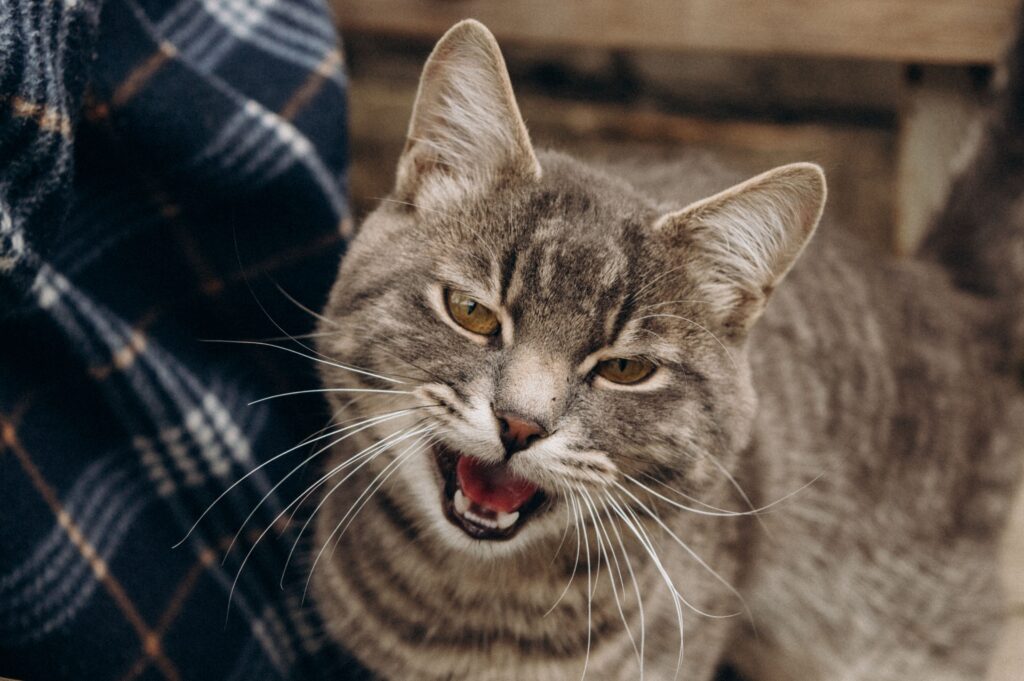
When Purring Can Be a Warning Sign
Although purring is generally a positive sign, changes in the pattern can indicate problems. Cats are masters at camouflaging pain and illness, a behavior inherited from their wild ancestors, where showing vulnerability could mean danger .
If your cat purrs suddenly, constantly, or accompanied by other signs, such as apathy, loss of appetite, behavior changes, ears back, or dilated pupils, it’s important to see a veterinarian .
Purring in situations of pain or illness is a self-soothing mechanism and a way to release endorphins, which are natural painkillers . But it doesn’t replace veterinary diagnosis and treatment.

Conclusion
Cat purring is much more than a simple sign of happiness. It’s a complex phenomenon involving a unique physical mechanism, serving multiple functions — from communication to self-healing — and may even have therapeutic effects for humans. The 2023 discovery about the passive mechanism of the feline larynx revealed that we still have much to learn about this mysterious sound.
The next time your cat purrs on your lap, remember: it might be expressing contentment, asking for attention, self-soothing, or even promoting its own healing. And, as a bonus, it might be helping you too.
Frequently Asked Questions
Why do cats purr?
Cats purr for various reasons, not just contentment. Purring can express happiness, serve as communication between mother and kitten, function as a request for food or attention, act as a self-healing mechanism and pain relief, or help them self-soothe in stressful situations .
How do cats produce the purring sound?
Traditionally, it was believed that purring was produced by active muscle contractions in the larynx. However, a 2023 study showed that cat larynges can produce the sound passively, without neural input, thanks to connective tissue masses embedded in the vocal folds .
What is the “solicitation purr”?
It’s a specific type of purr that cats use to ask for something, usually food. It contains a high-frequency component that resembles a baby’s cry, causing humans to perceive it as more urgent and respond more readily .
Does cat purring have healing power?
Yes, research indicates that purring frequencies (25 to 150 Hz) coincide with frequencies used therapeutically for bone regeneration, pain relief, edema reduction, and tissue recovery. This suggests that purring may play a role in cats’ self-healing .
Is purring good for humans?
Yes. Studies suggest that hearing and feeling a cat’s purr can reduce stress, lower blood pressure, reduce the risk of heart attacks, and stimulate the release of oxytocin, the well-being hormone .
Why does my cat purr when it’s sick?
Cats may purr when in pain or sick as a self-soothing mechanism and to release endorphins, which are natural painkillers. However, if the purring is accompanied by other signs, such as apathy or loss of appetite, it’s important to see a veterinarian .