

Why is the sky blue ?
The science behind the color we see every day
Have you ever looked up at the sky on a sunny day and wondered why it is blue? Or have you tried to explain to a curious child why the sky has that familiar color?
The answer lies in physics, chemistry, and the way our eyes perceive light. And, contrary to what many imagine, the sky is not blue because it reflects the ocean or because there are blue pigments in the air. The explanation involves sunlight, atmospheric molecules, and a phenomenon called Rayleigh scattering.
Let’s understand this fascinating story — from the basic physics to the details that make the sky even more interesting, such as the reddish sunset and the colors of the sky on other planets.
“When my nephew asked me why the sky is blue, I gave a vague answer about ‘reflecting the ocean’ — and he wasn’t satisfied. It was only when I studied Rayleigh scattering that I could truly explain it, in a simple way, and see his eyes light up with curiosity.”
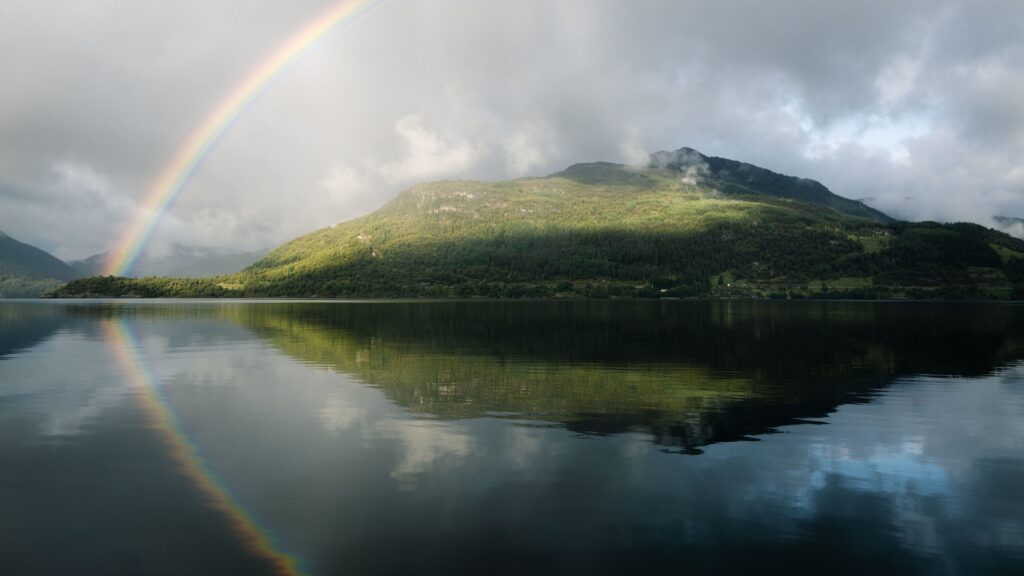
Sunlight: an invisible rainbow
The first step to understanding the blue sky is knowing that sunlight is not white; in fact, it is made up of all the colors of the rainbow . This was demonstrated by Isaac Newton, who used a prism to separate sunlight into its constituent colors .
Each of these colors is a light wave with a different wavelength. Red light waves are long and lazy, while blue light waves are short and quick. Blue has a wavelength of about 400 nanometers, while red is around 700 nanometers .
This very difference in size explains almost everything.
Why is the sky blue? Why is the sky blue? Why is the sky blue? Why is the sky blue?
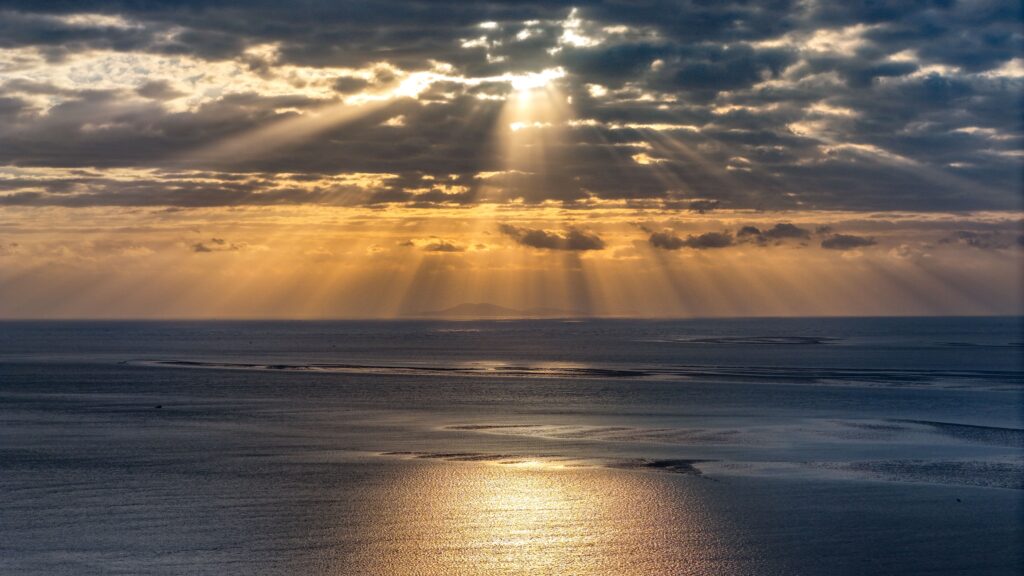
The role of the atmosphere: Rayleigh scattering
When sunlight reaches Earth’s atmosphere, it encounters a huge number of gas molecules, mainly nitrogen and oxygen . These molecules are tiny — much smaller than the wavelength of visible light .
When light hits these molecules, it interacts with them, causing the molecules’ electrons to oscillate. These oscillating electric charges act as tiny antennas that re-emit light in all directions . Physicists call this process scattering.
This specific type of scattering — which occurs when light interacts with particles much smaller than its wavelength — is known as Rayleigh scattering, named after the British physicist Lord Rayleigh, who described it in detail in the 19th century .
Now, here’s the crucial point: the intensity of Rayleigh scattering is inversely proportional to the fourth power of the light’s wavelength .
In other words: the shorter the wavelength of light, the more it is scattered. Since blue light has a short wavelength, it is scattered much more intensely than red light, which has a long wavelength .
Blue light is scattered about 10 times more than red light .
Why is the sky blue? Why is the sky blue? Why is the sky blue? Why is the sky blue?
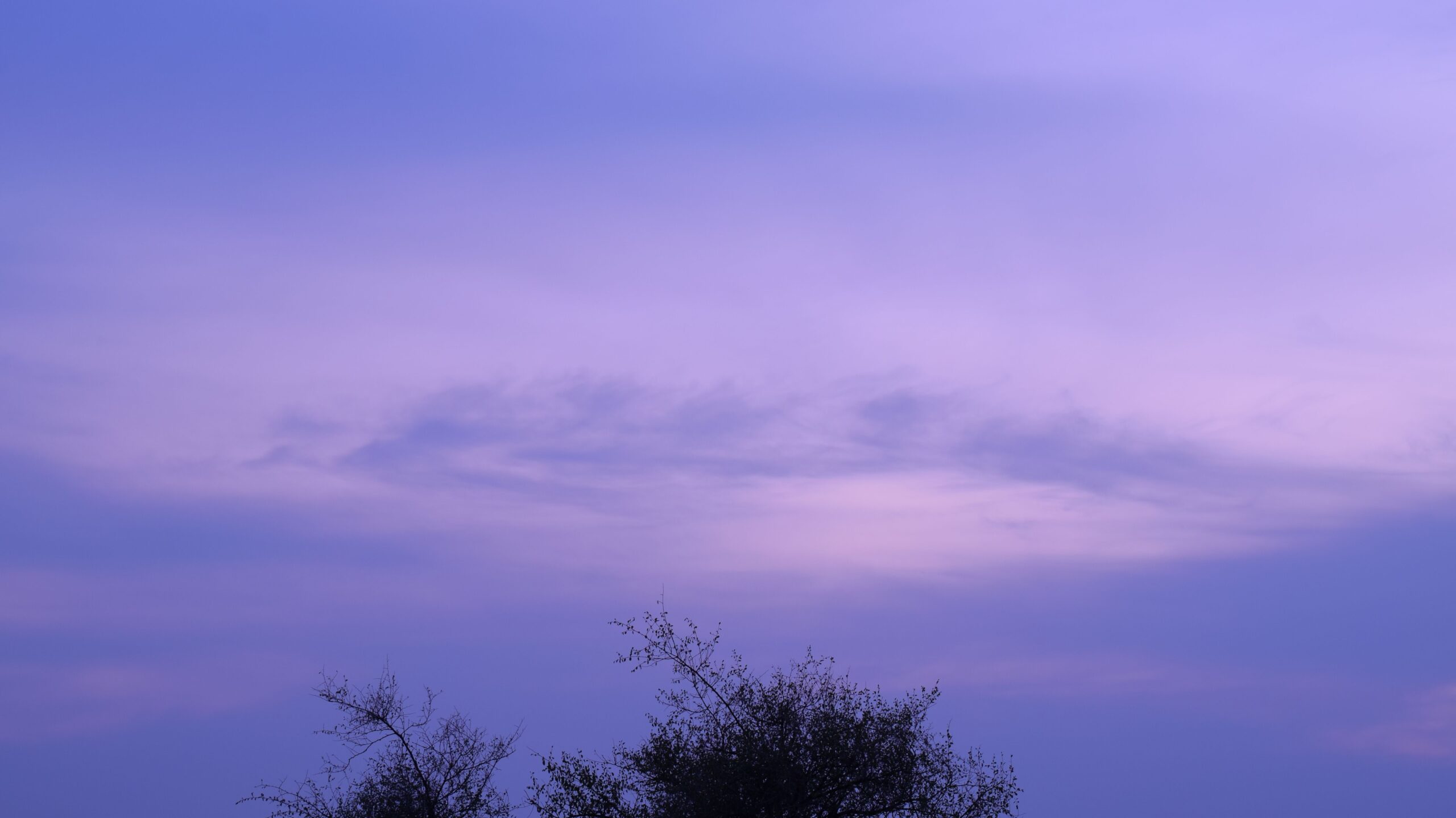
So why do we see a blue sky and not a violet one?
If violet light has an even shorter wavelength than blue, why isn’t the sky violet?
The answer combines two factors. First, violet light from the Sun is less abundant than blue light in the light that reaches the surface. The solar spectrum is not uniform, and the atmosphere absorbs part of the violet light in the upper layers .
Second, and more importantly: the way our eyes work. We have three types of color receptors (cones) in the retina, which respond most strongly to red, green, and blue . When we look at the sky, the scattered blue light strongly stimulates the blue cones and, to a lesser extent, the red and green ones. The brain interprets this combination as the color we call sky blue, not violet .
Why is the sky blue? Why is the sky blue? Why is the sky blue?
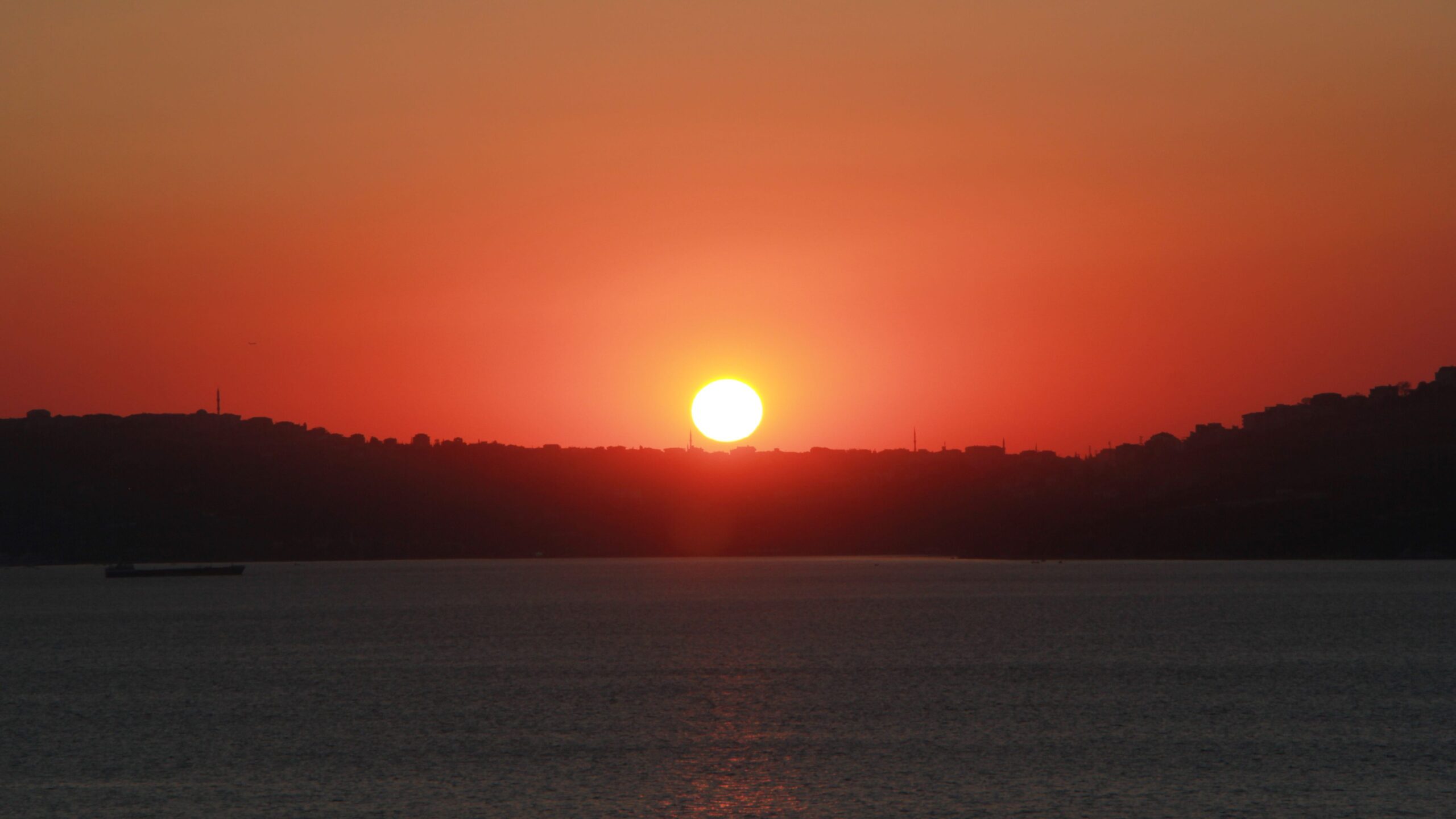
And the sunset? Why is it red?
When the Sun sets, its light has to pass through a much thicker layer of the atmosphere to reach us . Along this longer path, almost all of the blue light has already been scattered in other directions. The light that reaches us directly is therefore made up mainly of red and orange colors, which were less scattered .
That is why we see a reddish or orange sunset — we are seeing the light that was not scattered .
“I always admired the reddish sunset without fully understanding why. After I understood that we’re seeing the light that wasn’t scattered, every sunset took on a different meaning for me — it’s physics happening before our eyes every day.”
Why is the sky blue? Why is the sky blue? Why is the sky blue?
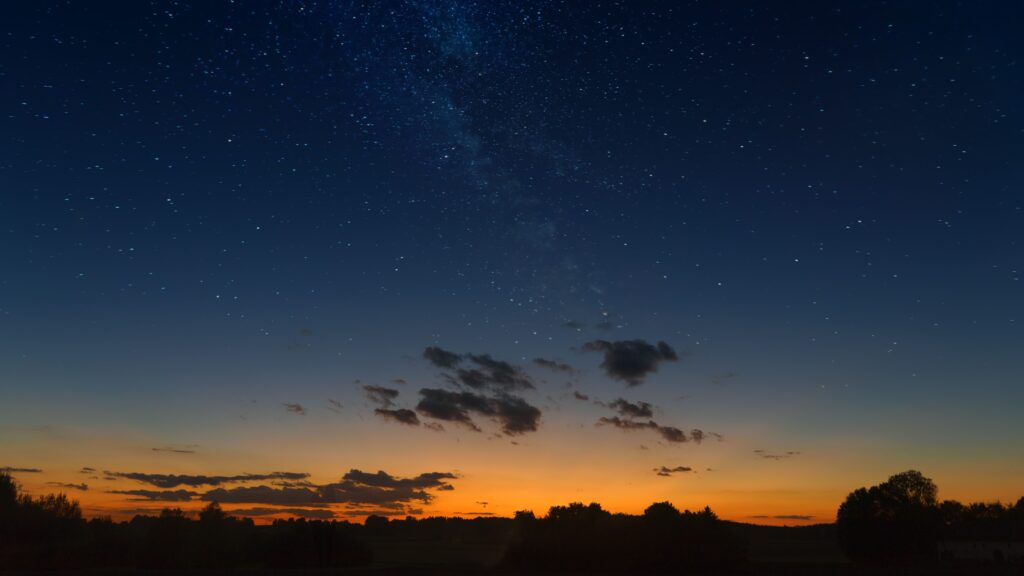
Why is the sky darker near the horizon?
During the day, the sky at the zenith (directly overhead) is dark blue, while near the horizon it is lighter. This happens because, when looking near the horizon, the light also travels a longer path through the atmosphere, and the blue light has already been scattered and re-scattered several times, mixing with other colors and appearing whiter or lighter .
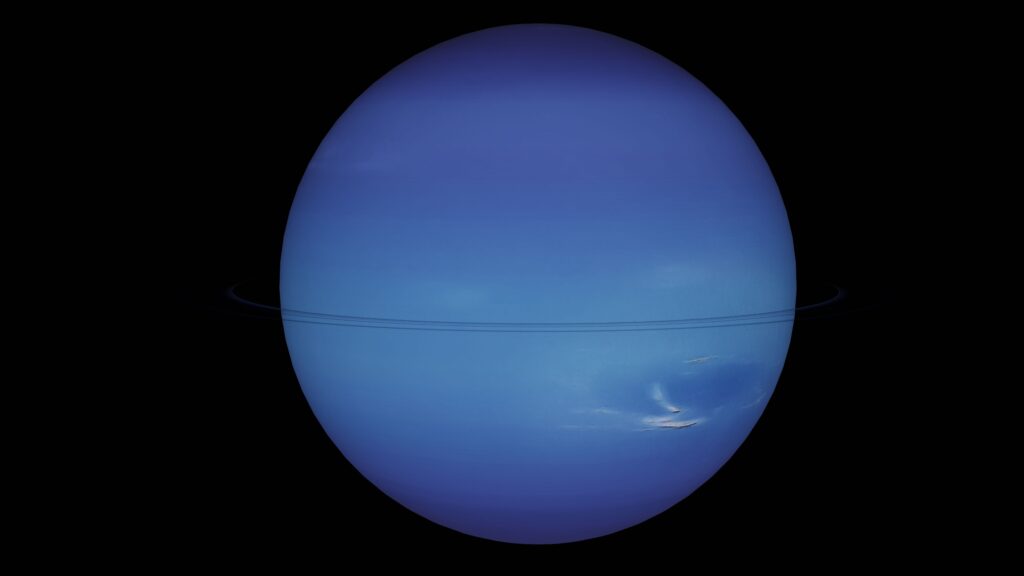
Is the sky blue on other planets?
The color of the sky depends entirely on what makes up each planet’s atmosphere. On Mars, for example, the atmosphere is very thin and full of fine dust, which makes the daytime sky an orange or reddish hue. But the sunset on Mars… is blue!
Why is the sky blue? Why is the sky blue? Why is the sky blue?

Frequently asked questions about the blue sky
What is the name of the phenomenon that makes the sky blue?
Rayleigh scattering, named after the physicist Lord Rayleigh .
Why isn’t the sky violet, since violet light is scattered even more?
Because violet light is less abundant in the solar spectrum that reaches the surface, and our eyes are less sensitive to this color .
Why is the sunset red?
Because at that time, sunlight travels a longer distance through the atmosphere, and almost all the blue light has already been scattered, leaving only red, orange, and yellow colors .
Is the blue sky related to pollution?
No. Rayleigh scattering occurs with the air molecules themselves (oxygen and nitrogen). Pollution can alter the sky’s color in some situations, but the fundamental cause is the physics of light and the atmosphere .
Is the sky blue on other planets?
It depends on the atmosphere. On Mars, the daytime sky is orange, and the sunset is blue

Why is the sky blue? Why is the sky blue? Why is the sky blue? Why is the sky blue? Why is the sky blue? Why is the sky blue?