
How to better organize your day
A practical guide to a lighter and more productive routine
How to better organize your day How to better organize your day
Have you ever reached the end of the day exhausted but with the feeling that you didn’t accomplish anything truly important? Have you looked at your to-do list and felt immediate discouragement, not from big tasks, but from the accumulation of small things that never seem to end?
If this happens frequently, the problem is probably not a lack of time. Most of the time, what needs to change is how you organize your routine. The good news is that productivity is not a gift reserved for a few people. It’s a skill that can be developed with simple and applicable techniques in daily life.
The feeling that the day is short is often not related to the number of tasks, but to how they are distributed. Habits like checking notifications constantly, responding to emails at the wrong time, switching between several tasks, and starting the day without a plan consume hours without you realizing it. In the end, you’re busy all the time but make little progress on what really matters.
In this guide, you’ll learn practical, evidence-based techniques to better organize your day, increase your productivity, and regain control over your routine — without having to work twice as hard.
“I used to end the day exhausted but with the feeling that nothing important had been done. When I decided to write down everything I did for three days, I discovered I was losing almost two hours a day switching between emails, notifications, and small tasks — it was a shock, but also the beginning of change.”
How to better organize your day How to better organize your day How to better organize your day

The foundation: understand how you use your time
Before applying any technique, it’s essential to understand how you’re currently spending your time. Many people skip this step and try to implement productivity methods without knowing where the real bottlenecks are.
Diagnose your routine
For a few days, write down everything you do and how much time each activity takes. You’ll be surprised to discover how many hours are consumed by tasks that don’t bring real results. The feeling of always being busy but unproductive often comes from confusing “being busy” with “being productive”.
Identify your peak energy moments
Most people have two to three hours of peak cognitive performance per day. For many, this happens in the mid-morning, roughly from 9:30 AM to 12:00 PM. Night owls may find their peak in the late afternoon or evening. Reserve your most important and challenging tasks for these times. How to better organize your day How to better organize your day How to better organize your day

Proven techniques to organize your day
There are dozens of productivity methods, but most follow the same logic: helping you define priorities, maintain focus, and avoid wasting energy. Here are the most effective and tested ones.
1. The 2-Minute Rule
The 2-Minute Rule, popularized by David Allen in his GTD (Getting Things Done) method and by James Clear in “Atomic Habits,” is one of the simplest and most powerful techniques to combat procrastination.
The premise is straightforward: if a task takes less than two minutes to complete, do it immediately. Don’t put it off. Don’t write it down. Don’t try to schedule it. Simply execute.
The logic behind this is efficiency. The time and mental energy you spend reading an email, thinking about it, adding it to a “to-do later” list, and remembering to look at the list is greater than the time it takes to simply respond immediately.
What makes this rule even more powerful is the science behind it. Neuroscience shows that the human brain is programmed to seek efficiency and save energy. When you complete a quick task, the brain releases dopamine, a neurotransmitter associated with feelings of pleasure and satisfaction. This small reward creates a positive impulse that helps maintain focus and motivation.
Practical examples:
- Respond to a short email
- File a document
- Confirm a meeting
- Organize your workspace
- Save a file to the correct location
For new habits: James Clear adapted the rule for habit formation. The idea is to reduce any new habit to a two-minute version. Want to start reading? The goal is to “read one page.” Want to start running? The goal is to “put on your sneakers”.
Important caution: Use the rule to clear the path, but don’t spend the entire day only completing two-minute tasks. The goal is to clear the clutter so you can dedicate your best energy to the projects that truly matter.
2. The 1-3-5 Method
The 1-3-5 method is a simple planning approach that helps organize the day in a balanced way, avoiding overload.
How it works:
Instead of listing many tasks, select just 9 daily priorities:
- 1 big task — the main focus of the day, the one with the greatest impact or requiring the most time and concentration (e.g., writing the final project report)
- 3 medium tasks — important but not critical activities that require some effort and can be done in smaller blocks (e.g., responding to important emails, holding a team meeting)
- 5 small tasks — quick, simple, maintenance tasks that can’t be forgotten but don’t take much time (e.g., paying a bill, confirming an appointment, organizing your desk)
Why it works:
- Prevents overload and procrastination
- Provides clarity on priorities
- Guarantees a sense of real progress at the end of the day
3. The Eisenhower Matrix
When everything seems urgent, this technique helps separate what is truly important from what is merely urgent.
How it works:
Divide your tasks into four quadrants:
- Urgent and important — do now
- Important but not urgent — schedule for later
- Urgent but not important — delegate if possible
- Neither urgent nor important — eliminate
4. The Pomodoro Technique
If you get easily distracted or have difficulty starting a task, Pomodoro can be a great starting point.
How it works:
The logic is to divide work into short blocks, which makes long tasks much less tiring. It works well for studying, reading, writing, and activities that require concentration.
5. Time Blocking
Time fragmentation solves a central problem: when you block a specific period for a task, you’re making a commitment that’s harder to postpone. The block gives weight and urgency to the task. You don’t need to decide whether to work on it. The schedule has already decided for you.
Ideal block sizes:
- 25 minutes (sprint block): for administrative tasks, email processing, quick reviews. Ideal when you’re struggling with procrastination because the short commitment seems manageable
- 50 minutes (standard block): for writing, studying, project planning. Long enough to build significant momentum, but short enough to maintain concentration
- 90 minutes (deep work block): for software development, long-form writing, complex analysis, creative design. Aligns with your body’s ultradian rhythm How to better organize your day How to better organize your day How to better organize your day
“Time Blocking was the technique that most transformed my routine. Reserving fixed blocks for specific tasks gave me a clarity I had never experienced — today I know exactly what I’ll do at each hour of the day, and this drastically reduced my anxiety.”

Before the day begins: nightly planning
Tomorrow’s disorganization starts in how we end today.
Set aside three minutes at the end of the day to:
This simple move prevents you from waking up already rushed — because the next day doesn’t arrive as a leap in the dark, but as a conscious continuation.
Practical tip: when reviewing your tasks, identify the three most important points for the next day. This helps direct your energy to what really matters and avoid overload.
How to better organize your day How to better organize your day How to better organize your day
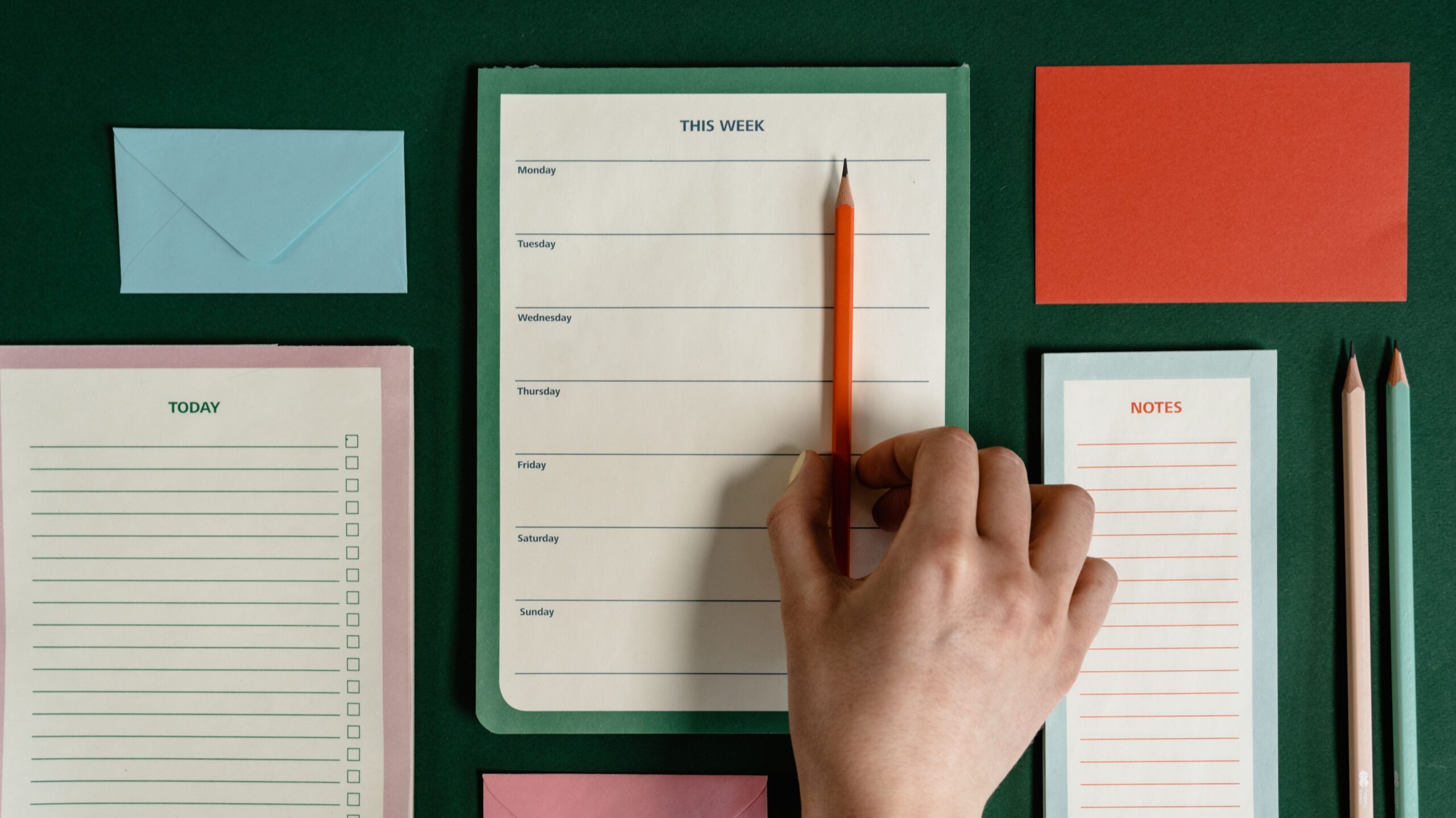
How to distribute your day: order matters
The big difference between a productive day and a chaotic one is often in how the day was “assembled.” It’s not just what you do, but the order in which you do it.
Your brain doesn’t handle a heavy meeting at 8 AM the same way it handles a block of light emails before lunch. How you distribute energy, attention, and breaks determines whether focus flows or stalls.
Real example: A marketing manager used to start the day diving into social media, answering messages, and putting out small digital fires. By 11 AM, he still hadn’t touched strategic projects. When he reversed it: he reserved the first two hours for a single important task, no meetings, no WhatsApp, no email. In three weeks, he reported coming home exhausted but with the real feeling that the day accomplished more than twice as much. The workload didn’t change. The day’s schedule did.
How to better organize your day How to better organize your day How to better organize your day

Common mistakes when trying to organize the day
1. Filling the schedule like a perfect Tetris game
With no space between blocks. Real life doesn’t work like that. Unexpected calls, urgent problems, and unforeseen events arise.
2. Leaving everything open
Trusting that “things will work out during the day.” The truth is that no one does this every day and maintains consistency.
3. Starting the day without a plan
The first difficult decision of the day should have been made the night before. Your brain appreciates waking up with a defined track.
How to better organize your day How to better organize your day How to better organize your day

Practical tips to apply starting today
1. Define your day’s anchor — a clear priority with a set time. Something like: “From 9 to 10:30 AM I’ll work only on the client X presentation”.
2. Group similar tasks into blocks — calls with calls, responses with responses.
3. Silence notifications for 30 minutes — small adjustments teach the mind that it doesn’t need to run all the time.
4. Create micro-breathing intervals between tasks.
5. Close the day with two minutes of review — just to decide the first block for tomorrow.

Frequently asked questions about organizing your day
What’s the first thing I should do to better organize my day?
Start with a diagnosis. Write down everything you do for a few days. Identify where your time is really going before trying to change anything.
What to do when everything seems urgent?
Use the Eisenhower Matrix to separate what’s truly important from what’s merely urgent. Not everything that seems urgent really is.
How to deal with interruptions during the day?
Create specific “containers” for distractions. For example, reserve 30-minute blocks to respond to emails and messages, instead of doing this throughout the entire day.
Which technique is best to start with?
The 2-Minute Rule is the best starting point. It’s simple, immediate, and solves the most common problem: difficulty starting.
How to maintain consistency in organization?
The secret lies in rituals. Set fixed times for your anchor tasks, review your day every night, and accept that unexpected events will happen — but protect your sacred focus moments