
How to organize a small house-1
Without spending much…
Complete and Practical Guide
Have you ever felt that the clutter in your small house weighs more than the furniture? That coming home and seeing the mess leaves you tired before you even sit on the couch?
That feeling has a name: visual clutter. And it affects your life more than you imagine. The good news? You can fix it — and without spending almost anything.
Organizing a small house doesn’t require renovations, custom furniture, or expensive organizers. With method, creativity, and a few habit changes, you can transform your space into a functional, beautiful place that makes you feel good. And the best part: most solutions cost $0. Let’s go step by step.
“When I moved into my 430-square-foot apartment, I thought the problem was its size. It was only when I started letting go of excess and repurposing glass jars and cardboard boxes that I realized: the space wasn’t small, it was just overloaded with things I didn’t use.”
How to organize a small house How to organize a small house How to organize a small house
Why organizing a small house is more important than you think
In small spaces, every object out of place takes up more than physical space: it takes up your energy, your time, and your patience.
Visual clutter is not just an aesthetic issue. Studies show that messy environments increase stress levels and make concentration more difficult. The human brain processes every visual stimulus around it, and when there are too many objects, colors, and shapes competing for attention, it creates a cognitive overload that leaves us mentally exhausted.
The movement known as Quiet Organizing emerged exactly from this perception: organization should not be just about putting things away, but about creating visual calm, where the eye finds rest and the mind relaxes.
And the best part: to achieve this, you don’t need a big budget. You need, yes, strategy.
Step 1: Declutter before organizing (and spend $0)
The biggest mistake people make when trying to organize on a budget is trying to keep everything. If you buy boxes, baskets, and shelves before getting rid of the excess, you’ll waste money and still feel cramped.
The first step, and the most important one, costs nothing: it’s decluttering.
Go through each room and make three piles:
- What you use frequently — keep it.
- What you haven’t used in over a year — donate, sell, or discard.
- What is broken or incomplete — either fix it now or get rid of it.
According to organization experts, the “one in, one out” rule is essential to prevent accumulation from happening again: for every new item that comes into your home, another must leave.
Practical tip: grab a large bag or box and put in it all the items you think you could donate. Leave it stored for a week. If you don’t miss anything, donate it without guilt.How to organize a small house How to organize a small house How to organize a small house
Step 2: Use what you already have intelligently
Before running to the store, look inside your cabinets and drawers. Many organization solutions are already there, waiting to be repurposed.
Boxes, jars, and baskets you already have
- Cardboard boxes (from shoes, electronics, or deliveries) can become drawer dividers. Just cut them to the right height and, if you want, cover them with fabric or paper to make them look nice.
- Glass jars (from preserves, jam, or palm hearts) are perfect organizers for utensils, makeup brushes, pens, or spices. Remove the labels and they’re ready to use.
- PET bottles can be cut and transformed into organizers for plastic bags, small item holders, or even plant pots.
A bookshelf can be your new shoe organizer
It sounds strange, but it works. A tall, narrow bookshelf can almost double the storage capacity of your closet or bedroom. Instead of having shoes scattered on the floor, you organize them vertically, see them all at once, and never forget that shoe that was at the bottom of the closet.
As organization specialist Dorie Chevlen, from The New York Times, explained, “the best organization solution is the one you already have.” A shelf you already own, even if it’s old, can gain a new function and solve a space problem at no cost.
Thin hangers and DIY dividers
- Velvet hangers are ultra-thin and non-slip, allowing you to store up to twice as many clothes in the same space. The type of hanger directly influences closet capacity, according to experts.
- Cardboard dividers for drawers of socks, underwear, and accessories are an affordable and effective solution. Cut strips of cardboard to the exact size of the drawer and fit them in to create compartments.
How to organize a small house How to organize a small house How to organize a small house
Step 3: Think vertically — your walls are your best friends
In a small house, floor space is precious. The cheapest and most efficient solution is to use the walls.
Shelves (which can be made from reclaimed wood or pallets) multiply your usable area without taking up floor space. Hooks, nails, and simple supports allow you to hang everything from pots and kitchen utensils to bags, coats, and keys.
What you can do right now:
- Install a rail or rod in the kitchen to hang pots, utensils, and even jars of spices.
- Use adhesive hooks (without damaging the wall) behind the bathroom door to hang towels and toiletry bags.
- Use the wall above the bed for a shelf that serves as a headboard and space for books and lamps.
Doors and windows are also underutilized areas. Light curtains and hanging plants near windows help break the feeling of confinement typical of small spaces.
How to organize a small house How to organize a small house How to organize a small house
Step 4: Invest in furniture that does more than one thing
If you’re going to buy something, prioritize furniture that solves more than one problem.
- Bed with storage or with drawers underneath: the space under the bed is one of the most valuable in small houses. Use storage boxes to keep bedding, out-of-season clothes, or documents.
- Foldable or drop-leaf table: can be mounted on the wall and opened only when needed. Perfect for those who live in a studio or need a workspace.
- Sofa bed or ottoman that becomes a table: furniture with wheels is also great because you can move them as needed.
If you already have a piece of furniture, you can adapt it. A regular bench can get a cushion and become a storage chest. An old table can become a workbench with a few shelves above it.
Important: if you’re furnishing, plan ahead. Designers recommend using 3D planning tools (free ones) to test the layout before buying, avoiding unnecessary spending on furniture that doesn’t fit or blocks circulation.
How to organize a small house How to organize a small house How to organize a small house
Step 5: Create zones in the environment without building walls
Anyone who lives in a small apartment knows: often, the living room, kitchen, and bedroom share the same space. But you don’t need walls to define areas.
Subtle and affordable dividers:
- Rugs: a different rug for each area already creates a clear visual separation. The sofa area is one environment; the dining table area is another.
- Light curtains or screens: create temporary dividers that can be opened or closed as needed.
- Low furniture: a low bookshelf or sideboard can serve as a divider between the living room and bedroom, maintaining a sense of spaciousness.
Designer Azby Brown, author of “Small Spaces,” observes that “soft divisions” are ideal in small environments: a corner with a lamp and a plant can already become a reading or work space without needing renovation.
Lighting also defines zones: use different lights for each area. A floor lamp in the living room, a desk lamp in the office, and a softer, warmer light in the bedroom. This layering of light creates the feeling of separate environments without the cost of renovation.
“The trick of using rugs and different lights to define each zone of the house completely transformed the feeling of spaciousness. Today, even without walls, I can feel that I have a living room, a reading corner, and a work area — each with its own atmosphere.”
Step 6: Adopt “Quiet Organizing” — organization that soothes
Have you heard of Quiet Organizing?
It’s a philosophy that has been gaining strength in 2026 and proposes something simple and profound: organization should not be just about tidying up, but about creating an environment where the eye can rest.
The central idea: instead of filling your home with boxes, colors, and objects, you reduce visual noise, keeping only what is functional and beautiful. It’s not about radical minimalism, but about intentionality.
How to apply the 80/20 method in your home
The Pareto principle (80/20) applied to organization says that we use 80% of things only 20% of the time. In other words: most of what takes up space in your home is not used frequently.
By identifying these objects and deciding what to do with them, you free up mental and physical space.
How to do it:
- Reserve the most visible areas (countertops, eye-level shelves, the entrance) for what you use daily and for decorative elements that truly bring you joy.
- Everything else should find its place in drawers, boxes, or cabinets — out of sight, but always accessible.
When the environment is not overloaded, the mind also rests. There’s more clarity, sleep improves, and the feeling of control over your own space is much greater.
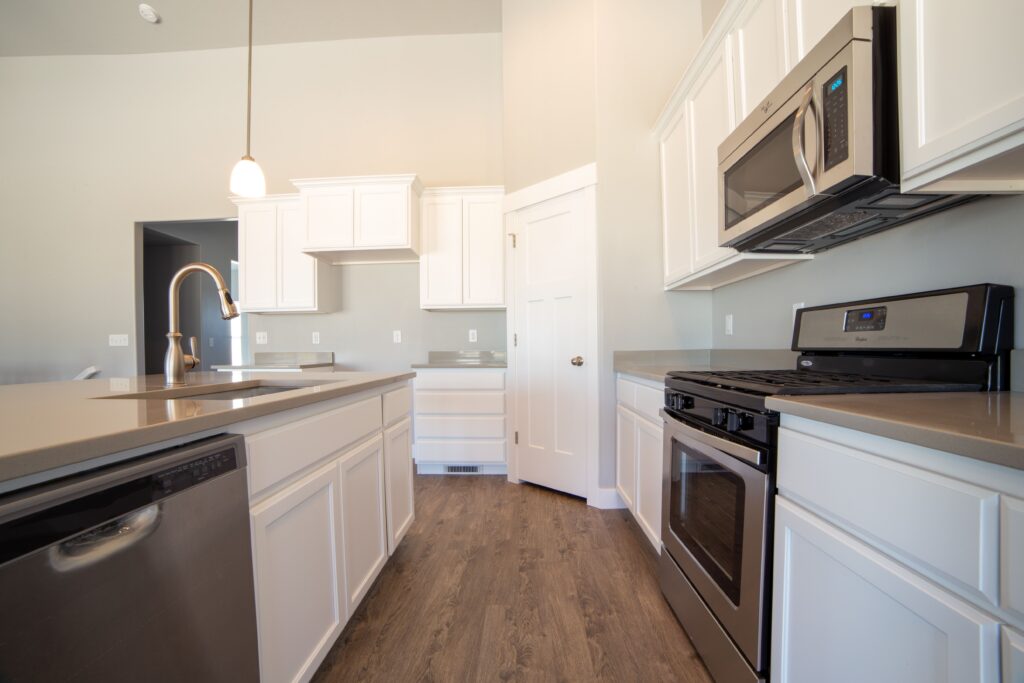
Step 7: Create 1-minute maintenance habits
Organizing is a process, not an event. If you do a mega-organization over the weekend but don’t maintain it, in two weeks the mess will be back.
The key lies in daily habits.
- The 1-minute rule: if a task takes less than 1 minute to do, do it now. Hang up your coat, put away your shoes, wash the glass you used.
- The 10-minute daily reset: before going to sleep, spend 10 minutes putting everything back in place. Return objects to their “home,” arrange cushions, clean the kitchen counter.
- Seasonal reviews: every 3 months, do a quick review and donate or discard items you no longer use.
Maintaining small habits is easier and more sustainable than doing huge organizational cleanups every six months.
Common mistakes when trying to organize on a budget
1. Buying organizers before eliminating excess
You’ll spend money on boxes and baskets that will end up full of things you don’t even use. Eliminate first, organize later.
2. Buying multiple cheap items that don’t match
You end up with a collection of boxes in different colors and materials that create more visual clutter. Prefer neutral tones and similar materials.
3. Ignoring walls and doors as organization areas
Vertical space is free. Using hooks, shelves, and door racks can multiply your storage capacity without taking up a single inch of usable floor space.
4. Trying to do everything at once
Organizing the entire house in one weekend is exhausting and often ineffective. Start with one room or even one drawer. Gradual progress is more sustainable.
How to organize a small house without spending a lot How to organize a small house without spending a lot
Frequently asked questions about organizing small houses
What’s the first thing I should do to organize my small house?
Start with decluttering. Before buying any organizer, separate what you actually use from what’s taking up space for no reason. Donate, sell, or discard what no longer serves you.
Is it possible to organize a small house without spending anything?
Yes! Most of the most effective solutions don’t require purchases, just repurposing. Cardboard boxes, glass jars, PET bottles, and furniture you already have can be rearranged to serve new functions.
What is “Quiet Organizing”?
It’s an organizing approach that prioritizes visual calm. Instead of filling the house with boxes and objects, the goal is to reduce visual clutter, keeping only what is functional and beautiful, so that the eye and mind can rest.
How do I keep the house organized after tidying everything up?
Create small daily habits: the 1-minute rule (do now what takes less than 1 minute), the 10-minute reset before bed, and reviews every 3 months.
Is it worth buying multifunctional furniture?
Yes, but carefully. Prioritize pieces you’ll use every day, like a storage bed or a folding table. If possible, adapting furniture you already have is even more economical.
How do I organize the kitchen in a small house?
Use the walls with shelves and hooks, use glass jars to store spices, keep countertops clear, and use simple organizers (like cardboard dividers or cut PET bottles) for utensil drawers.

How to organize a small house How to organize a small house How to organize a small house
How to organize a small house How to organize a small house How to organize a small house
2 thoughts on “How to organize a small house-1”